The New Republic this week deals with the question of Iraq. I would recommend reading this because it covers a wide range of ideas. Here is a quote from the editors.
"At this point, it seems almost beside the point to say this: The New Republic deeply regrets its early support for this war. The past three years have complicated our idealism and reminded us of the limits of American power and our own wisdom. But, as we pore over the lessons of this misadventure, we do not conclude that our past misjudgments warrant a rush into the cold arms of "realism." Realism, yes; but not "realism." American power may not be capable of transforming ancient cultures or deep hatreds, but that fact does not absolve us of the duty to conduct a foreign policy that takes its moral obligations seriously. As we attempt to undo the damage from a war that we never should have started, our moral obligations will not vanish, and neither will our strategic needs."
Wednesday, November 29, 2006

XM Radio and Copyright Infringement
After reading Who Control's the Internet?: Illusions of a Borderless World, by Jack Goldsmith and Tim Wu, I thought about what other forms of technology may be experiencing this same path of creating borders that prevent users from crossing the line between what is legally, morally, or socially acceptable and what is not. The first thing I thought of was the XM Satellite Radio. So I searched for some news articles on the relatively new technology (it has been around for several years now) and found several law suits involving the XM Satellite Radio. Major record labels have filed suits against XM Radio because of copyright infringement. The recording capabilities of the new XM Radio receivers allow users to record save music, similar to how TiVo records on one's television.
So it appears that XM Radio has comparable issues to those of the Internet. There must be some limit to what a user can do with these new technologies so that legal boundaries, such as copyrights, are not crossed.
I do not really understand how this is different from recording music from a normal radio station to a cassette tape, but apparently that is illegal too, unless authorized by RIAA (there is a small subsection about this at the bottom of the article found below).
So what next, ban recordable CDs for recording music?
You can read the article here.
When ya gotta go....
I guess when nature calls, there is no choice but to relieve yourself of it. When you are dedicated, you'll go to any lengths to win. For some, that can mean urinating in public, or on themselves. Check this out.
It is amazing what you can find on a topic when you start searching google for wierd stuff. Another thing mentioned in class was the so called "Runner's trots" as many call it. Apparently running for long periods of time causes gastrointestinal problems in some runners. There are even published articles on this topic from journals of medicine.
It is amazing what you can find on a topic when you start searching google for wierd stuff. Another thing mentioned in class was the so called "Runner's trots" as many call it. Apparently running for long periods of time causes gastrointestinal problems in some runners. There are even published articles on this topic from journals of medicine.
Funkadelics
The Funkadelics were mentioned in class the other day, so I went to look up some lyrics. I found some pretty interesting lyrics, and have copied some below. You can find more lyrics here at songlyrics.com
{assorted groans, whispers, wails & moans}
{spoken}
A luscious bitch she is, true
But it's not nice to fool mother nature
The proud mother of god like all ho's
Is jealous of her own shadow
So who is this young Vic Tanny bitch
Who wish to be queen for a day?
Who would sacrifice the great grandsons and daughters
Of her jealous mother
By sucking their brain
Until their ability to think was amputated
By pimping their instincts
Until they were fat, horny and strung-out
In her neurotic attempt to be queen of the universe
Who is this bitch?
Tuesday, November 28, 2006
Iraq?
Iraq seems to be getting worse by the day. Hundreds dead on Friday with more certain to come. The Iraq Study Group is working behind the scenes to come up with some solution to save face. John McCain said we should deploy the requisite troops needed to get the job done or find a way out if we do not have the will to do so. Meanwhile the Democrats are discordant in their policy with ABSCAM-participants being put up for election to the majority leader seat in the House due to political debts (Thankfully he lost). What if anything can be done or thought of?
I do not wish to propose any ideas because the ideas are useless unless we first determine what our goals are. The nation may wish to remain uninformed about the true motives or goals of the Iraq war. Whether it is to bolster oil, slow China’s progress, create political diversions at home, or to reshape the Middle East in an attempt to further its efficiency in the world system; the American public does not appear overtly willing to consider these ideas.
It troubles me what the effect of American involvement or withdrawal will be? Will it be better for us to do what is necessary to create some form of stability? While many Americans have now found it beneficial to call for withdrawal, it seems that withdrawal is akin to Vietnamization. Instead of fixing the mess, we appear to be ready to leave. It may be in the American thought to now dissolve ourselves of guilt and instead engage in some form of orientalism and claim it is “their” fault things are not working instead of acknowledging our own guilt. People on both sides who completely failed and emasculated themselves by refusing to question entry or the initial conduct of the war now say “not our fault, not our problem”. Maybe the question should now be, “our fault, how do we fix it so that Iraq works for their benefit and our own”, yes I said our own because it is our mess to clean up and as a realist sympathizer, a benefit to our own state power. Without endorsing Bush we need to be willing to take military, economic, and diplomatic measures necessary to fix the problem. This may be unpleasant but I think it is in our own interest and responsibility to find a solution that works without us leaving a bigger problem then we started with. This may be what our goal should be. Good Night.
Monday, November 27, 2006
Bookstore...
I went to the bookstore and checked out some of the clothes they got:
Most of the product were made in Guatemala, Mexiko, Vietnam and Phillipines. Only one item was made in the US (IL). Be aware!
Most of the product were made in Guatemala, Mexiko, Vietnam and Phillipines. Only one item was made in the US (IL). Be aware!
Darwin's Nightmare III
Indeed, the documentary does a real good job. There are two interesting points that I wanted to add:
Firstly, what I also found quite striking is that the poorest of the poor are really self aware of their situation. During the documentary a Tanzanian security guard points out that he is very aware of the fact that international institutions as the IMF and the World Bank are ran by people from the Western world and that they are not interested in the common good of the Tanzanian people. In addition he says that only education would help to change the negative trend in Tanzania, but is also aware that he does not have the money to allow his children to study and go to school.
Secondly, besides the fact that the Tanzanian people are exploited by the Western world, I found it also interesting, how we employ Russians in order to transport weapons to African ( and even to Afghanistan) and transport fish to Europe. This documentary shows how global capitalism works and how the market is looking in all directions in order to find the cheapest labor (Russians, old Russian cargo-planes, Tanzanians).
The Path to Wealth
The article I read from New York Times, "Lure of Great Wealth Affects Career Choices", points out how people are choosing Wall Street oriented careers over other careers which provide "useful" services. There are graduate school and medical school graduates who are experts and specialists in their prospective fields but choose the path to wealth through Wall Street. Some qualified medical doctors never even practice medicine because they enter into another career path through Wall Street, perhaps advising people on where to invest their money. The difference is that as a doctor they would only make $100,000 but on Wall Street they could be making upward of several millions.
Dr. Glassman, a graduate of Harvard Medical School, stated:
So as more people choose to enter Wall Street to find their own path to wealth, what will happen to the fields of academia and scientific research? What about the lawyers who graduate law school but choose to make more money on Wall Street?
John Moon, a managing director of Metalmark Capital, said that, "“If Wall Street was not there as an alternative, I would have gone into academia."” So, perhaps with more people leaving their specialized fields to enter Wall Street there will be a larger demand for people who wish to enter academia.
Dr. Glassman, a graduate of Harvard Medical School, stated:
"I wasn'’t sure that I was willing to take the risk of spending many years applying for grants and working long hours for the very slim chance of winning at the roulette table and making a significant contribution to the scientific literature”".As a hematology-oncology specialist, Dr. Glassman earned about $150,000 in 1996. He recently changed his career path to management consulting. He never stated how much he now makes on Wall Street or his net worth, however, experts estimate he brings home an annual income in the seven figures and estimate his net worth to be more than $20 million.
So as more people choose to enter Wall Street to find their own path to wealth, what will happen to the fields of academia and scientific research? What about the lawyers who graduate law school but choose to make more money on Wall Street?
John Moon, a managing director of Metalmark Capital, said that, "“If Wall Street was not there as an alternative, I would have gone into academia."” So, perhaps with more people leaving their specialized fields to enter Wall Street there will be a larger demand for people who wish to enter academia.
Sunday, November 26, 2006
Darwin's Nightmare
I saw a documentary a couple weeks ago, called "Darwin's Nightmare", that made me aware of some of the problems that have occurred and are occurring in Africa, namely Tanzania. The documentary looks at the poverty, health issues, crime, and the import of weapons to fuel the war in southern Africa (Congo, Rwanda, etc).
The main source of income for the people of Tanzania is now commercial fishing. The introduction of the Nile Perch into Lake Victoria has disrupted the socioeconomic local system, and has forced the country into the world trade system. To exacerbate the situation further, the planes from Europe which were exporting the Nile Perch had also been importing weapons to fuel the war being fought in southern countries of Africa.
I found this film to be a very effective way to open the eyes of the public to these problems occurring in Tanzania. The documentary, although it pointed out problems with poverty and the exploitation of the resources extracted from this area, also brings up health issues that are causing problems. The largest of these health problems is the spread of AIDS. A priest who was interviewed in the film said that the use of condoms was a sin, therefore he is not allowed to recommend that people practice safe sex. So it seems that this issue, though it is able to be prevented, is more related to cultural and religious beliefs. Methods of preventing AIDS are available to the people but are not commonly practiced.
I would recommend seeing this documentary if you have not seen it already. I think this is a great film that relates to globalization. It definitely shows how a country with very few resources has come to be a part of the world system by shipping out several tons of processed meat from the Nile Perch in order to supply many countries in Europe with a food in fairly high demand.
Sunday, November 19, 2006
Vietnam




The news regarding Vietnam recently has been interesting. First, a president embroiled in what could become a modern day Vietnam is visiting the site where many in his administration first cut their teeth in power. Cheney, Wolfowitz, Rumsfeld, and many of the senior level generals and Pentagon officials were just getting their start when the Vietnam War occurred. They seemed to have forgotten some of the lessons but have learned some things including manipulating the press, lessening the impact of the death tolls, and stifling opposition as un-patriotic.
What really interests me is the House’s refusal to pass a treaty recognizing Vietnam as a free trade partner. First, many argued against the bill because it furthered the process of free trade. This is unpopular with many because of the perception that it cost jobs. It is also interesting that the legacy of the war was problematic as well. Some republicans argued against it because it would further normalize or integrate a prior enemy while some on the left felt it did not do enough to strengthen labor rights. It strikes me as odd that the party that got into Vietnam full strength is now having qualms about the quality of life for civilians while the party that exited Vietnam is worrying over trade with an old enemy. I also happen to think that both sides will prove inconsequential because Vietnam will still be able to join the WTO and continue its integration into the world system. Good Night.
http://www.nytimes.com/2006/11/15/business/15trade.html?ex=1321246800&en=712dcc3b4aa071fd&ei=5088&partner=rssnyt&emc=rss
Wednesday, November 15, 2006
Questions of my own
Some of these may be observations rather then questions.
1. If Japan played a major part in US involvement in Korea, was it more so out of fear of a threat to the system or a need to preserve further spread of Communism? Did it also seem odd that only a few years after the war that Japan would regain regional hegemony with a few different conditions such as openness to trade?
2. This a broad point. Reading so far has led me to the conclusion that a system must be in play for reasonable stability. If this idea is somewhat recognizable, then would the communist/socialist system have been any less exploitation or did the better system (liberal capitalism) eventually win in the end?
3. It seems as if there was a continuum in US policy from the late 1890's onward throughout the use of the a-bomb and US insistence that Japan be kept from Russian hands or policy. The goal appeared to be an emphasis on liberal economics and adherence to US norms and policy. Is there any truth to this?
4. Schoonover's conclusion makes more sense now with the chapter on post-WWII events. He observed that communist Russia and Vietnam were logical responses to the imperial/neo-imperial policies of the west. Should we view them as such or should we also look at external factors such as the influence of the USSR? Why did they go Communist when Japan, S.Korea, Taiwan, the Malaysia and many other South Asian and Pacific nations went with the liberal world system? Nonetheless it does seem correct that western difficulties with these two nations did rest upon the inherent nature of the world system.
5. Without engaging in majority's simpleton arguement, was it logical for the US to hold back in Korea? If the goal was to further the world system in favor of the US, why would China not merit addition? Or was the restraint due to the internal/external needs of US politicians who realized that long term success was more important and required restraint to matinee domestic support?
6. The delay in peace talks was presented by McCormick as a need to implement NSC-68. Could also be that the delay was imperative for the US to concretely implement the new evolution of the military-industrial complex that was required to support its world system?
7. It seems odd in Germany that the US could quickly turn into a better friend then that of one of its war allies France. While the war was brutal, did the conclusion of it mean that enemies could quickly become friends in a world system were economics were more important than prior conflicts? Also, did US alliance with Germany occurring early on in the Cold War, was the US already seeing an endgame where Germany would be key to toppling the Cold War and in creating a new Europe with a relatively friendly Germany as its core?
8. Was Vietnam really the loss of American hegemony given its current friendly relations and embrace of the world system?
9. Were Japan and Vietnam effects of WWII goals to create a free Asia where liberal economics would rule the day? Or should the be looked at separately? My interest is in how Japan like Germany quickly became the centerpiece of US policy with an understanding that arms and power must be given to preserve the world system to former enemies.
10. I found the suggestion that the Cold War was used to suppress the EEC interesting. A new Europe with a clearly antagonistic French outlook on US would have surely led to an impediment on trade and a reorganization of European relations with the USSR. Is this a correct understanding of US actions that seemed to intesify the conflict?
11. Hegemony v. Intergration. If intergration would bring countires into the world system, is it any better or worse then communist attempts to keep them out. Can intergration be looked as a way for the hegemon to ensure the success of its systerm even if ability declines to prop up the system?
12. Can Israel and its destabilizing actions be looked at as an effect of US need to keep the Middle East non-commuinst/USSr friendly? Could it also be that the Middle East in turmoil is more profitable for the world system if the "Achilles heel" of the world system is oil? Is this one of the reason's the US continues to prop uo Isreale and keep out of its actions?
Discussion Questions for McCormick - Take 2
Here are some more discussion questions (2 from each chapter) regarding McCormick's America's Half-Century.
Chapter 1
What are the two instances that a single hegemonic power overtook the balance of power in the capitalist world economy and what was the crucial element for the formation of this single hegemonic power in both cases?
What gave the ins-and-outers the advantage over the careerists?
Chapter 2
What strategy did the US employ to minimize casualties, achieve continuous victories, and maintain their wealth during WWII?
What was the significance of the Yalta System and what brought it to a close?
Chapter 3
What was the reason for the US to utilize the atomic bomb twice and with such haste?
How was productionism favorable to the US? What did other nations fear about productionism?
Chapter 4
What were the major concerns of American government and big businesses when the dollar gap impacted the trade between America and Europe?
What were the American responses to the dollar gap and how did they influence this crisis?
Chapter 5
What common goal was the US seeking by entering into the Korean War and Vietnam War?
If Vietnam "had little intrinsic value" according to McCormick, then why did the US play such a large role in the war?
Chapter 6
How did the French stand in the way of American hegemony after the return of French leader de Gaulle?
How did the US deal with peripheral nations that turned from being stable parts of economic internationalism to being uncooperative?
Foreign policy today
I found an article on foreignpolicy.com by Marcia Pally, a professor at NYU, that directly relates to the material we are covering in McCormick's America's Half-Century.
According to Pally, foreign policy will not change as much as some think, though there may be many changes in the "domestic arena". Pally takes a fairly neutral approach to this article. She looks back to the "exceptional period of U.S. internationalism" which is exactly what we are covering in the text by McCormick.
Pally compares Bush's invasion in Iraq to the US invasions of the past, such as Phillipines, Korea, and Vietnam. She concludes that although the results are dissimilar, the motives are the same. That is, the US looks to maintain a stable periphery in order to have "access to the key resources".
Monday, November 13, 2006
Question
I enjoyed the book so far.
1. Is world systems an appropriate way to analyze events or do events require analysis on issues other then sole economic imperatives?
2. I agree with others on the question of American hegemony. It seems that while other nations such as China may be on the rise, American hegemony is evolving rather than disappearing after the end of the Cold War. How do we reconcile McCormick argument that since the 1970's hegemony has been on the decline when it seems to have remained strong?
3. I enjoyed the analysis of the domestic sphere reinforcing the notion of hegemony. McCormick was convincing in his argument that much of American popular belief is unsupported by fact. What would it take for Americans or any nation for that matter to look at themselves objectively without merely accepting the beliefs that elites want to propagate?
I also enjoyed reading Julie's response. It was redeeming in its clarity and clarification of beliefs that at first seemed...well somewhat on the verge of political fanaticism. Hopefully moderation and reason will win the day. Good afternoon.
Discussion Questions for McCormick
I enjoyed reading this first part of McCormick's America's Half-Century more than any of the books we have covered up to now.
The 3 discussion questions I have developed for the reading (Ch 1-4) follow. I was most comfortable with the material in the first chapter, so I focused my discussion questions on that material.
In America's Half-Century, published more than 10 years ago, McCormick raises the question, "Will the United States accept the loss of hegemony, and how will it define its new role in world affairs?". So my question is, has the US lost its hegemony at present, or is the US in the process of losing or regaining hegemony?
Does the US act as the global policeman, and overinvest in military production (a sign of speeding up the decline to a rentier nation and warfare state, according to McCormick)?
How is hegemonic power distributed throughout the world today?
Schoonover
Chapter six, "The War of 1898 in the Pacific Basin" examinies the background and the development of the war. Schoonover spots the need for "...industrial and consumable raw materials, labor, markets for overproduction, investment opportunities, and a stake in the future of selected external areas of resources", as the trigger for the US intervention in the Pacific Basin. For him the whole campaign was a response "...with a set of expansionist policies". While elaborating on the actual development of the different battles, Schoonover points out that the Filipinos were civilized, disciplined, intelligent and organized and partly independent (even under Spanish rule) and therefore showed no desire for American rule and resisted the US army in devastating and bloody skirmishes, which should last for decades. Schoonover gives various examples of Americans who opposed the war (Mark Twain, Henry Adam, Henry Waterson...) and identified it as Social Imperialism. Further, he also shows how other countries, as Germany for example, tried to benefit from the political change by securing their interest in the Pacific Basin. He concludes this chapter by talking about how Americans changed their language ("liberate"="occupy" and "pacify"= "conquer"), in order to change the mindset of the people at home (make them believe that the Filipinos were inferior and needed guidance) and to advance their expancionist policies in the Pacific Basin.
Sunday, November 12, 2006
Moderation and Reason, the bedstone of my political beliefs
I share Julie’s hope for a change with the Democrats regaining control after the 2006 midterms. It seems clear that uni-party government does not lead to reasonable outcomes or honesty. It fosters insulation against differing ideas resulting in mis-management.
Now for the response Julie must have known would result from her clear adoration of Congresswoman and potential House Speaker Nancy Pelosi. It is interesting how the character traits that made some politicians in-competent and foolish are know being heralded as much needed. Bush’s backwater conservatism meets Pelosi’s and other liberal democrat’s inner city idealism and liberalism, six one way and half a dozen the other. Her strict adherence to her beliefs whereas the other side of course was foolhardy.
“Pelosi's democratic track record indicates a strong politician with apparent opinions and values... just the type of woman to open more political doors to females. Pelosi is no pushover, "she demands discipline and loyalty,”
Lets remember for a second 2004, Bush firm on beliefs whereas Kerry was prone to switching. An interesting change. Furthermore, is Pelosi any more at home to run the country that any other overly secure incumbent? My own intuition is that any challenger to her would face an uphill battle just as I am saddened to note that Republican Randy Forbes goes virtually unmatched in my own district. Just a thought to contemplate before one’s adoration turns into blind idol worship. While Pelosi’s gender will make history if she becomes the next speaker, I would certainly hope that biology alone is not enough to blind one’s reason.
However, I do understand Julie’s and others adamant liberal beliefs. I too used to feel secure in knowing that as a liberal I was right and others wrong. It felt good to look down un-approvingly on those “backwood” conservatives. I could articulate everything that was wrong and blame it all on Bush. I eventually reached some cracks in the logic of American liberals. I realized that they were as deciding and righteous as any person on the right. Many looked down on me as an aberration that could not exist within their select circle. My belief in things such as reason, the right of law-abiding citizens to bear arms, the belief that work is not such a bad thing, and that at times we have to reconcile our political beliefs with the economic needs of the nation; these all led me to see that liberals did not have the entire picture. I could not join conservatives either. They looked down on other individual rights such as gay marriage and felt that business deserved a free hand without any safety net. Furthermore, neither could articulate solutions, a real problem when the purpose of government is supposed to serve the people. The only logical conclusion was to become an independent.
Back to now, it is important to note that the Democrats who actually won races were moderate and more understanding of the needs of everyday America. Polticians such as Webb, Tester, or Kaine illustrate what is the future of the Democratic Party. There are two articles in The New Republic I would recommend. One deals with democrats being the party of the people (it highlights the difference between old liberals and new moderates, including the remarkable fact that many old school liberals were not self-made) and the other argues that “gun toting libertarians” will provide the future of the party. Furthermore, if the party wants to grow and possibly win 2008, Pelosi will quickly need to temper her beliefs. On Friday, an aide to Senator McCain announced an exploratory commission to examine his running in 2008. The party had better remember this. My hope is for moderates such as Obama, Edwards, Richardson, Warner, and others to take the helm. The Democratic Leadership Council, of which the party’s greatest hero in recent memory (Clinton) was part of works towards moderation. It also contains many officials who manage to win elections in red states and accomplish things with the Republicans. If the party is to continue, it will be with politicians who understand the needs of the global economy and can mange to balance the needs of the American people with the cold hard economic realities of the 21st century.
One other thing I would like to note. I feel that the unwillingness to compromise is the inability to govern. To govern is to understand all sides of the debate in an attempt to reach a reasonable and productive outcome.
“There is nothing wrong with America that cannot be cured by what is right with America”, Bill Clinton
Wednesday, November 08, 2006
Jagshemash...
I remember watching the Borat character in the "Ali G-Show" a couple of years ago and now after Sacha Cohen (the man behind "Borat") dedicated a whole movie to him, the whole world starts talking about this movie or tries to imitate his accent and his jokes.
First of all, I have to admit that I really like this kind of humour, but after having read a couple of articles which talk about the dangers of this movie, I have to admit too that not everyone gets the "real" joke behind Cohen's ballyhoo. I am probably biased, because one of my best friends is actually from Kazakhstan and since the first trailers of this movie were released, he has tried to convince me not to watch it... He keeps asking me me how we (people living in the 21st century) could not be even a little bit informed about Kazakhstan and why we tend to think of the East as an underdeveloped whole with no exceptions??? To be honest I do not have an answer???
This one article that I found from Eric Weiner ("The Real Kazakhkstan") deals with this issue and tries to make people aware of how people could misunderstand the message behind Cohen's humou. Please read it in the for my friend Genya's sake, because he has no problems with Jews at all, does not shoot dogs, does not sleep with his sister, does not believe in Pamela Anderson's virginity, does not listen to Corky Butshek and does not wrestle me all the time... :)
Borat
A few weeks back our school had free tickets to a preview of the film "Borat: Cultural Learnings of America for Make Benefit Glorious Nation of Kazakhstan". I know several people from the class were able to go see it. So I'm sure this will inspire a couple of you to share your thoughts.
I thought the movie was a brilliant mixture of grotesque humor and social satire, but I can understand how some people might take offense to it. Throughout the movie he constantly jokes about cultural stereotypes, religious beliefs, and social actions. In many cases the real insult of the joke is not even directed at the culture, religion, or people that are at the surface of the joke. Rather, the joke is directed toward the people around him (several of them blatantly racist). For example, many of his jokes involve Jews, but you have to think about the joke with an open mind and realize that he is not making fun of the Jews (he is actually Jewish himself). The review below brings up the question of "Does being Jewish himself make his jokes acceptable?" I guess it is a matter of opinion as well as how you view the direction of the joke.
I'd like to hear some other thoughts about the movie.
Check out the NYTimes movie review for Borat.
Tuesday, November 07, 2006
2006
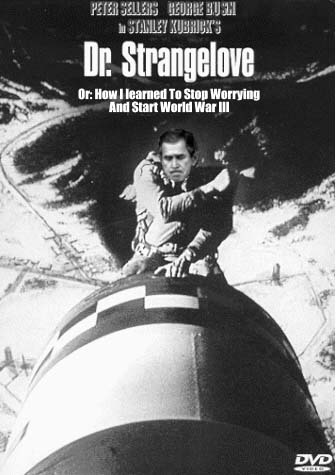
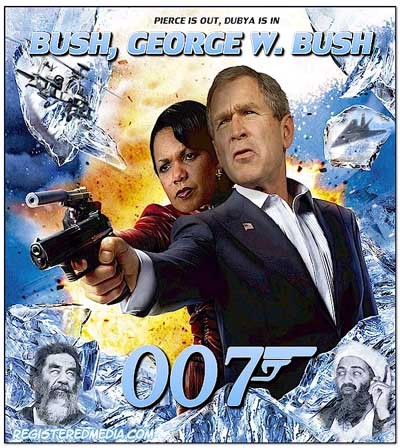
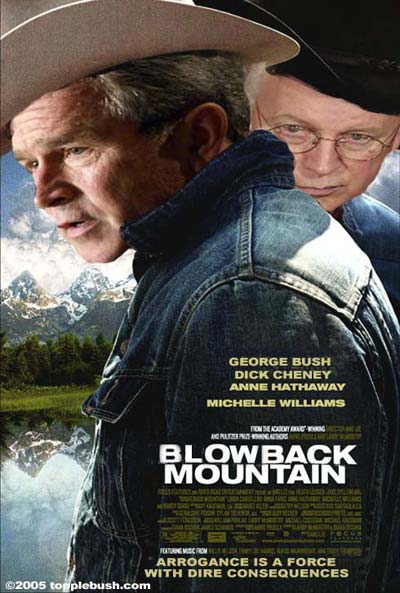

First and foremost, I am ashamed of my home state passing the clearly bigoted and unconstituitional implementation of religion on the state. Thankfully though at 10:10 the races still hold hope. I am going to provide some humor tonight to lighten the mood. Afterall, with any senator who can make a man on dog comparison (Santorum) there should be some humor in the air. Here are some fun lyrics along with some photos.
SWEET NEO CON
(M. Jagger/K. Richards)
You call yourself a Christian
I think that you're a hypocrite
You say you are a patriot
I think that you're a crock of shit
And listen, I love gasoline
I drink it every day
But it's getting very pricey
And who is going to pay
How come you're so wrong
My sweet neo con.... Yeah
It's liberty for all
'Cause democracy's our style
Unless you are against us
Then it's prison without trial
But one thing that is certain
Life is good at Haliburton
If you're really so astute
You should invest at Brown & Root.... Yeah
How come you're so wrong
My sweet neo con
If you turn out right
I'll eat my hat tonight
Yeah, yeah, yeah, yeah....
It's getting very scary
Yes, I'm frightened out of my wits
There's bombers in my bedroom
Yeah and it's giving me the shits
We must have loads more bases
To protect us from our foes
Who needs these foolish friendships
We're going it alone
How come you're so wrong
My sweet neo con
Where's the money gone
In the Pentagon
Yeah ha ha ha
Yeah, well, well
Yeah, yeah, yeah, yeah, yeah
Yeah, yeah, yeah, yeah, yeah...
Neo con
Subscribe to:
Posts (Atom)